Montenegro’s fisheries and aquaculture sectors play a vital role in sustaining coastal communities and driving local economic growth. Despite their importance, these sectors operate in a complex environment shaped by both significant opportunities for development and persistent structural and environmental challenges. Unlocking their full potential requires innovation, stronger value chains, and more sustainable resource management. Projects such as RECONNECT and its Blue Circular Matchmaker AI tool respond to these needs by promoting circular practices, empowering SMEs, and transforming marine by-products into sustainable economic opportunities.
Fisheries and Aquaculture in Montenegro: Challenges and Opportunities
Along Montenegro’s coast, small fisheries have long shaped the lives and tradition of local communities. Marine aquaculture, particularly seabass and seabream farming, has steadily grown over the last decade, contributing to local economic development and export potential. However, much of the sectors’ potentials remain untapped. Environmental pressures, underutilized by-products, and fragmented value chains challenge both fishers and farmers. Strengthening infrastructure, innovation, and sustainable practices is key to supporting resilient coastal livelihoods.
Jovan Martinović, CEO of MM Ribarstvo d.o.o. in the interview for Chamber’s monthly magazine Glasnik, April 2025
In recent years, the business environment in Montenegro has shown signs of progress, particularly through efforts aimed at digitalization, improving the legal framework, and strengthening support for export-oriented companies. However, as a company from the fish processing sector, we believe there is still significant room for improvement, especially in terms of support for the real sector, which generates added value and creates new jobs.
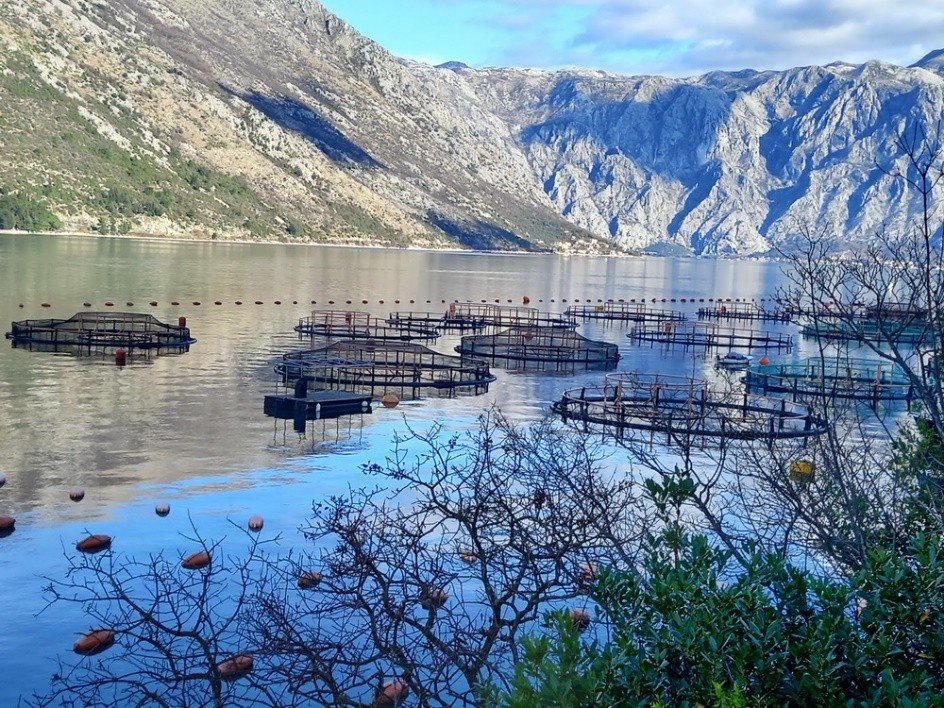
Small-scale fishers and aquaculture SMEs often operate in fragmented systems with limited access to innovation. As Montenegro progresses in its EU alignment and green transition efforts, strengthening sustainability and circularity within fisheries and aquaculture becomes increasingly important. This is where RECONNECT steps in to take action.
The project is reconnecting tradition with innovation across Montenegro’s blue sectors. The Blue Circular Matchmaker tool will act as a bridge, linking aquaculture by-products to new market opportunities and circular solutions. It will represent a practical step toward a more integrated fisheries and aquaculture sector, thus fostering collaboration between fish farmers, artisans, and researchers.
From Lake Skadar to the Adriatic coast, Montenegro’s fisheries and aquaculture are entering a new chapter. The future of these sectors lies in reconnecting fragmented systems and matching local strengths with emerging opportunities. Strengthening collaboration across value chains will be essential to ensure long-term resilience and competitiveness. Cooperation, innovation, and shared responsibility will shape these sectors’ long-term success.
“The Chamber of Economy of Montenegro, as an umbrella business association of Montenegro, which represents and promotes the common interests of the Chamber’s members, as well as the overall Montenegrin business community, plays an active role in promoting awareness of the blue economy, unlocking the growth potential of blue resources, and strengthening cooperation between academia and the business sector to stimulate innovation-driven development”